
What Are Body-Focused Repetitive Behaviors? A Guide for People Who Pull, Pick, or Bite
What Are Body-Focused Repetitive Behaviors?
A Guide for People Who Pull, Pick, or Bite
Body-Focused Repetitive Behaviors (BFRB) | Habit Reversal Training (HRT) | Therapy San Francisco Bay Area | Mindfulness-Based Therapy
What Are Body-Focused Repetitive Behaviors?
Body-focused repetitive behaviors are a group of self-grooming behaviors, such as hair pulling, skin picking, and nail biting, that become repetitive, feel difficult to control, and cause noticeable distress or physical damage. The two BFRBs with their own formal diagnostic categories in the Diagnostic and Statistical Manual of Mental Disorders (5th ed., text rev.) are trichotillomania (hair-pulling disorder) and excoriation disorder (skin-picking disorder), both classified under obsessive-compulsive and related disorders (American Psychiatric Association [APA], 2022). Other common BFRBs, including nail biting and cheek or lip biting, are recognized clinically even though they do not have separate DSM-5-TR entries.
These behaviors are more common than most people realize. The DSM-5-TR estimates that 1.7% of U.S. adults currently have trichotillomania, while 2.1% currently have excoriation disorder, with a lifetime prevalence of 3.1% (APA, 2022). The International OCD Foundation (n.d.) reports that broader hair-pulling behavior, which may not meet full diagnostic criteria, affects as many as 1 in 10 people. Onset most often occurs in adolescence, and BFRBs affect people across genders, ages, and backgrounds.
Common Types of BFRBs
Trichotillomania (Hair Pulling)
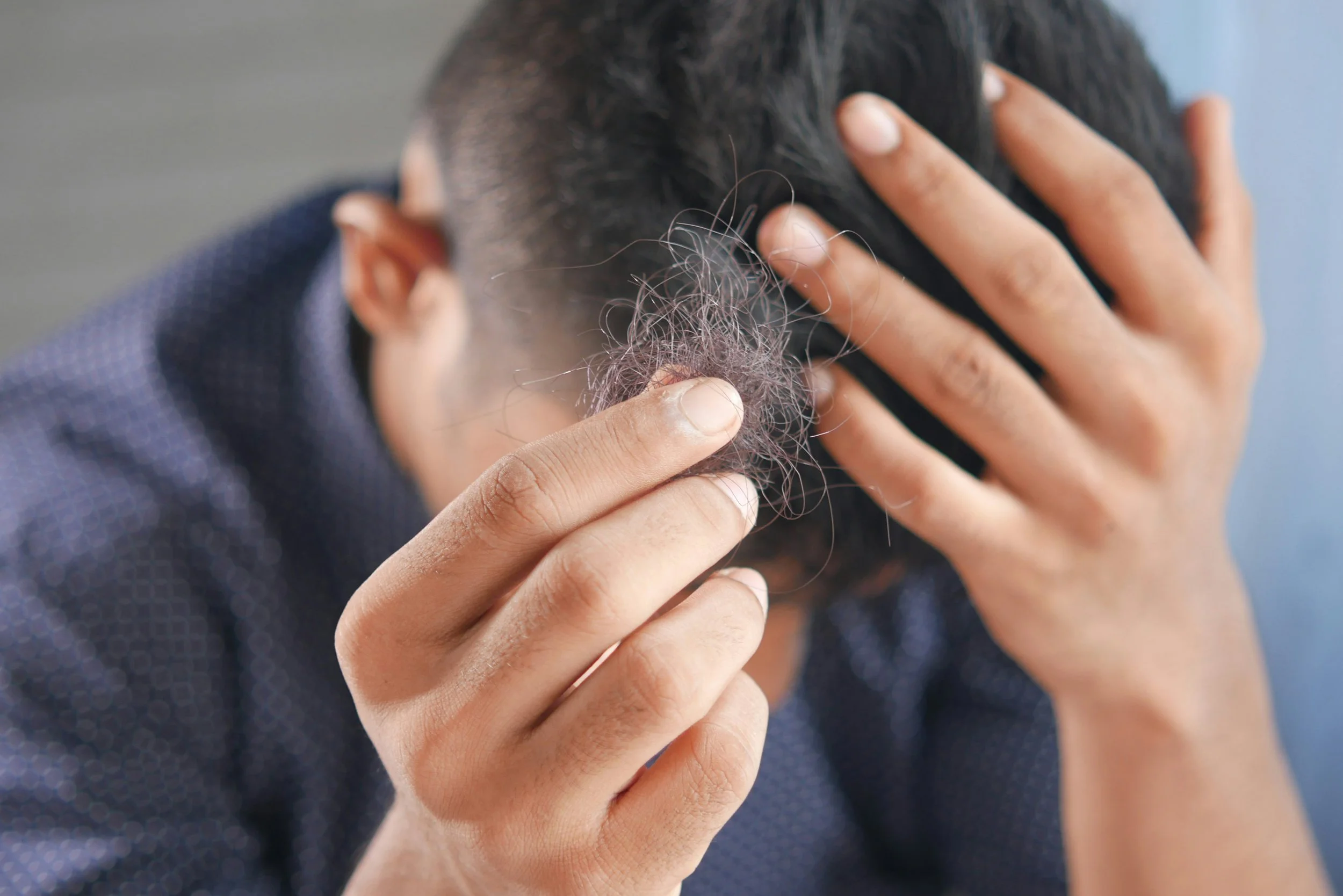
Trichotillomania involves recurrent pulling of hair from the scalp, eyebrows, eyelashes, or other areas, resulting in noticeable hair loss. Diagnostic criteria include repeated attempts to stop or reduce the behavior and clinically significant distress or impairment in daily functioning (APA, 2022). Pulling sites often shift over time, and many people describe both a sense of tension before pulling and relief or satisfaction afterward.
Excoriation Disorder (Skin Picking)
Excoriation disorder involves recurrent skin picking that causes lesions, along with repeated unsuccessful attempts to stop (APA, 2022). Picking can target the face, arms, hands, or scalp and is frequently triggered by perceived skin irregularities, stress, or boredom. Left untreated, it can lead to scarring, infection, and significant shame or social withdrawal.
Nail Biting and Other BFRBs
Onychophagia (nail biting), cheek or lip biting, and other repetitive grooming behaviors fall under the broader BFRB umbrella. While they lack their own DSM-5-TR category, they share the same underlying patterns and respond to the same evidence-based treatments as trichotillomania and excoriation disorder (International OCD Foundation, n.d.).
What Causes BFRBs?
There is no single cause of BFRBs. Genetics, temperament, and learned coping patterns all appear to play a role, and BFRBs commonly co-occur with obsessive-compulsive disorder (OCD) and anxiety (International OCD Foundation, n.d.). Rather than being a sign of weak self-control, BFRBs are often a way the nervous system attempts to regulate difficult emotions, sensory needs, or understimulation, which is exactly why willpower alone rarely resolves them.
Evidence-Based Treatment for BFRBs
The good news is that BFRBs respond well to specific, well-researched therapies. Therapists trained in BFRB treatment typically draw from three complementary approaches.
Habit Reversal Training (HRT)
Developed by Azrin and Nunn (1973), HRT remains the most researched behavioral treatment for BFRBs. It involves building awareness of urges and early warning signs, then practicing a competing physical response, such as clenching a fist, that makes pulling or picking difficult to continue.
The Comprehensive Behavioral (ComB) Model
ComB treatment expands on HRT by mapping the sensory, cognitive, affective, motor, and environmental factors that maintain a specific person's BFRB, then targets each factor with individualized strategies (International OCD Foundation, n.d.). Because every person's triggers are different, this personalized assessment is often key to lasting change.
Acceptance and Commitment Therapy (ACT)
ACT adds acceptance-based skills to behavioral treatment, helping people relate differently to urges and uncomfortable emotions rather than fighting or avoiding them. In a randomized controlled trial, adults who received combined ACT and HRT showed significant reductions in hair-pulling severity and impairment compared to a waitlist control, with gains largely maintained at three-month follow-up (Woods et al., 2006). Combining ACT with HRT is now considered a strong evidence-based standard for BFRB treatment.
When to Seek Help
If pulling, picking, or biting is causing physical damage, taking up significant time, or affecting your confidence and relationships, it is worth speaking with a therapist who specializes in BFRB treatment. These behaviors tend to persist and even worsen without targeted support, but with HRT, ComB, and ACT, meaningful reduction in symptoms is achievable for most people.
Our San Francisco-based practice offers evidence-based BFRB treatment for adults and teens across the Bay Area, with in-person sessions in San Francisco and online therapy available throughout California. If you are ready to better understand your BFRB and build a personalized treatment plan, reach out to schedule a consultation.
References
American Psychiatric Association. (2022).
Diagnostic and statistical manual of mental disorders (5th ed., text rev.).
Azrin, N. H., & Nunn, R. G. (1973). Habit-reversal: A method of eliminating nervous habits and tics. Behaviour Research and Therapy, 11(4), 619–628.
International OCD Foundation. (n.d.). Body-focused repetitive behaviors (BFRBs). Retrieved July 1, 2026, from https://iocdf.org/about-ocd/related-disorders/body-focused-repetitive-behaviors/
International OCD Foundation. (n.d.). Comprehensive behavioral (ComB) treatment for skin picking and hair pulling disorders. Retrieved July 1, 2026, from https://iocdf.org/expert-opinions/comprehensive-behavioral-comb-treatment-for-skin-picking-and-hair-pulling-disorders/
Woods, D. W., Wetterneck, C. T., & Flessner, C. A. (2006). A controlled evaluation of acceptance and commitment therapy plus habit reversal for trichotillomania. Behaviour Research and Therapy, 44(5), 639–656. https://doi.org/10.1016/j.brat.2005.05.006
Ready to get started with individual therapy in the Bay Area?
mindfulSF offers individual therapy in San Francisco, Oakland, and throughout the Bay Area for anxiety, OCD, depression, trauma, job stress, parenting and more. Online services also offered across California.