

Neurodivergent-Affirming Therapy Isn't Just a Buzzword: Here's What's Actually Different About the Approach
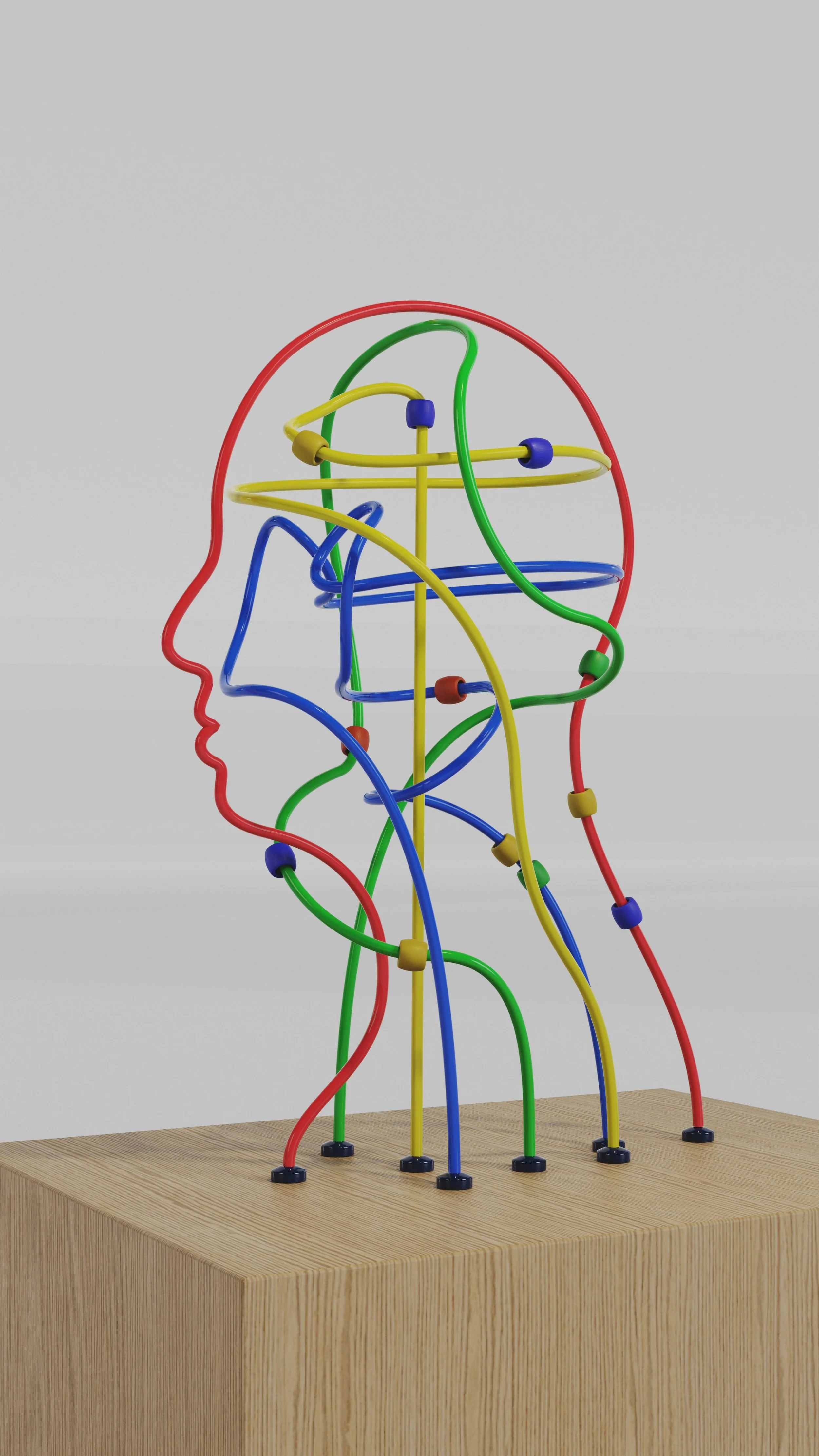
Neurodivergent-Affirming Therapy Isn't Just a Buzzword
Here's What's Actually Different About the Approach
Neurodivergence | Attention-Deficit/Hyperactivity Disorder (ADHD) | Autism Spectrum Disorder (ASD) | Obsessive-Compulsive Disorder (OCD) | Therapy San Francisco Bay Area | Evidence-Based Therapy
What Is Neurodivergent-Affirming Therapy?
We live in a society designed to favor neurotypical folks. But neurotypical is just one category of neurotype! There are other ways that human brains are designed. Autism, ADHD, OCD, dyslexia, Tourette syndrome, and other neurotypes are natural variations in how human brains work. Neurodivergent-affirming therapy understands them this way, rather than as disorders that need to be corrected (Pellicano & den Houting, 2022).
Neurodivergent (ND) folks face challenges from neurotypical society that often leads to masking, or hiding their neurodivergence to blend into neurotypical spaces. Neurodivergent-affirming therapy is a safe space for the mask to come off, and for ND folks to be themselves. Rather than asking, "How do we make you seem less autistic or ADHD?" neurodivergent-affirming therapy asks, "What do you need to thrive, and what is getting in your way?"
1. The Goal Isn't to Mask
Sometimes even well-intentioned therapists hurt their ND clients. They may coach clients to appear more neurotypical by practicing forced eye contact, suppressing stimming, or scripting social behavior. Research on social camouflaging shows that this negatively affects ND folks. Autistic adults who mask often describe exhaustion and a fragmented sense of identity (Hull et al., 2017). Camouflaging has been linked to poorer mental health outcomes (Cage & Troxell-Whitman, 2019). Effective therapy shouldn’t force an ND person to not be themself.
An affirming therapist helps you understand when and why you mask, and supports you in choosing where it's worth the effort and where you can safely unmask.
2. Communication Differences Are Mutual
Many therapy models assume that miscommunication is the ND person's problem to fix. The "double empathy problem" offers a different view: misunderstandings between autistic and non-autistic people are a two-way street (Milton, 2012). There are different ways of experiencing the world, and every which way is valid. Just because the majority of people to interact with are neurotypical, doesn’t mean that ND folks are solely responsible for learning the neurotypical way of moving through the world. Research shows that autistic people share information effectively with one another, at levels comparable to non-autistic pairs (Crompton et al., 2020), while non-autistic people often form negative impressions of autistic peers within seconds (Sasson et al., 2017).
In session with a neurodivergent-affirming therapist, your therapist will adapt by offering explicit rather than implied language, allowing processing time, welcoming written or visual tools, or letting you move, fidget, or look away.
3. Evidence-Based Treatments Are Adapted, Not Abandoned
Affirming care doesn't mean giving up structured, evidence-based treatment. At mindfulSF, we use approaches such as CBT, ACT, and ERP, and adapt them thoughtfully. This looks like:
Concrete, flexible CBT. Using clear examples, visual supports, and less abstract language.
Values-based ACT work. Focusing on what matters to you rather than on conforming to a neurotypical standard.
Careful ERP for OCD. Distinguishing true obsessions and compulsions from autistic special interests, routines, sensory needs, or stimming, so that natural neurodivergent traits are never treated as symptoms.
4. Burnout, Sensory Needs, and Environment Matter
Autistic burnout, described as profound exhaustion, loss of skills, and reduced tolerance for stimulation, is increasingly recognized in the research literature (Raymaker et al., 2020). Neurodivergent adults often arrive in therapy after years of pushing through. Affirming therapy addresses the whole picture: workload, sensory environments, rest, and boundaries, not just thoughts and behaviors.
This also extends to the therapy setting itself. Whether you meet in person or through telehealth, sensory-friendly options such as lighting, sound, and pacing can make a real difference.
5. Language Is Respectful and Collaborative
Affirming therapists pay attention to language. They avoid framing your traits as pathology, ask how you prefer to be described, and treat you as the expert on your own experience. Ableist language in clinical settings can shape how clients see themselves (Bottema-Beutel et al., 2021), so word choice matters.
What to Look For in a Neurodivergent-Affirming Therapist
When searching for an affirming therapist, consider asking:
How do you approach masking and unmasking?
How do you adapt evidence-based treatments for neurodivergent clients?
How do you tell the difference between a symptom and a neurodivergent trait?
Can I customize session format, pacing, and setting?
At mindfulSF, our San Francisco therapy practice offers in-person and telehealth services across California for adults, couples, and children ages 10 and up. We provide evidence-based care for ADHD, OCD, anxiety, PTSD, and burnout in a way that respects how your brain works. If you're ready to work with a therapist who understands the difference, contact us to schedule a consultation.
References
Bottema-Beutel, K., Kapp, S. K., Lester, J. N., Sasson, N. J., & Hand, B. N. (2021). Avoiding ableist language: Suggestions for autism researchers. Autism in Adulthood, 3(1), 18–29. https://doi.org/10.1089/aut.2020.0014
Cage, E., & Troxell-Whitman, Z. (2019). Understanding the reasons, contexts and costs of camouflaging for autistic adults. Journal of Autism and Developmental Disorders, 49(5), 1899–1911. https://doi.org/10.1007/s10803-018-03878-x
Crompton, C. J., Ropar, D., Evans-Williams, C. V., Flynn, E. G., & Fletcher-Watson, S. (2020). Autistic peer-to-peer information transfer is highly effective. Autism, 24(7), 1704–1712. https://doi.org/10.1177/1362361320919286
Hull, L., Petrides, K. V., Allison, C., Smith, P., Baron-Cohen, S., Lai, M.-C., & Mandy, W. (2017). "Putting on my best normal": Social camouflaging in adults with autism spectrum conditions. Journal of Autism and Developmental Disorders, 47(8), 2519–2534. https://doi.org/10.1007/s10803-017-3166-5
Kapp, S. K., Gillespie-Lynch, K., Sherman, L. E., & Hutman, T. (2013). Deficit, difference, or both? Autism and neurodiversity. Developmental Psychology, 49(1), 59–71. https://doi.org/10.1037/a0028353
Milton, D. E. M. (2012). On the ontological status of autism: The 'double empathy problem'. Disability & Society, 27(6), 883–887. https://doi.org/10.1080/09687599.2012.710008
Pellicano, E., & den Houting, J. (2022). Annual research review: Shifting from 'normal science' to neurodiversity in autism science. Journal of Child Psychology and Psychiatry, 63(4), 381–396. https://doi.org/10.1111/jcpp.13534
Raymaker, D. M., Teo, A. R., Steckler, N. A., Lentz, B., Scharer, M., Delos Santos, A., Kapp, S. K., Hunter, M., Joyce, A., & Nicolaidis, C. (2020). "Having all of your internal resources exhausted beyond measure and being left with no clean-up crew": Defining autistic burnout. Autism in Adulthood, 2(2), 132–143. https://doi.org/10.1089/aut.2019.0079
Sasson, N. J., Faso, D. J., Nugent, J., Lovell, S., Kennedy, D. P., & Grossman, R. B. (2017). Neurotypical peers are less willing to interact with those with autism based on thin slice judgments. Scientific Reports, 7, Article 40700. https://doi.org/10.1038/srep40700
Ready to get started with individual therapy in the Bay Area?
mindfulSF offers individual therapy in San Francisco, Oakland, and throughout the Bay Area for anxiety, OCD, depression, trauma, job stress, parenting and more. Online services also offered across California.